

Safranbolu celebrates its “Red Gold” at the 10th International Saffron Festival

From 1 to 4 November 2026, the Cittaslow city of Safranbolu, Türkiye, brought together farmers, researchers, chefs, young talents and international guests for four days dedicated to saffron, local heritage and community life.
Safranbolu’s Geographical Indication (GI) registered saffron was at the heart of the 10th International Saffron Festival, with a programme connecting agricultural traditions, gastronomic innovation, scientific research and cultural exchange.
The festival opened with a procession from the Martyrs’ Monument to Kazdağlı Square, accompanied by the Karabük Municipality Band. Traditional preparations, including the saffron dessert zerde and Cinci Hoca herbal paste, introduced visitors to local flavours. At Han Arkası, children gathered around a 30-metre table for an activity sponsored by GİZTAT, passing culinary knowledge from one generation to the next.
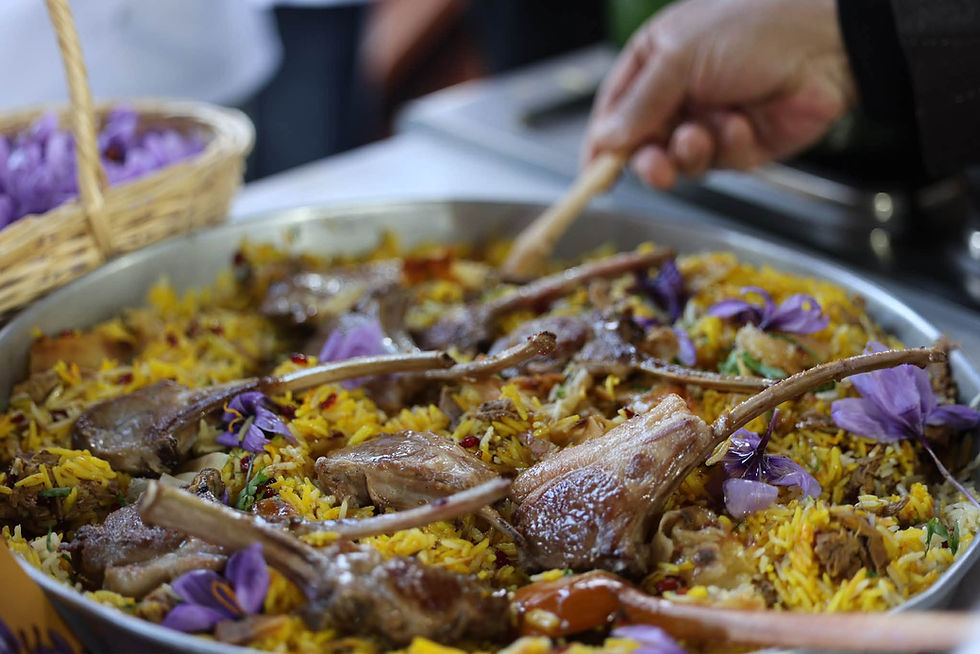
At Safranova, the Turkish Chefs Federation (TAFED) prepared and served saffron pilaf from a giant cauldron. An international saffron harvest, the “Play for Saffron” music event and children’s workshops completed the programme.
Gastronomy, science and innovation
At Hıdırlık Observation Hill, the Gastronomy Living Lab explored saffron’s journey from field to table. Mehmet Akgül, Dr Negin Azar Abadi and Prof. Dr Şahane Funda Arslanoğlu discussed its agricultural, scientific and gastronomic future.
Cooking sessions moderated by Karabük University lecturer and chef Tolgahan Tabak featured Cüneyt Asan and Hazer Amani, joined in the kitchen by Safranbolu Mayor Elif Köse. Other demonstrations explored saffron’s versatility through seafood dishes, saffron baklava and a saffron pumpkin milk pudding.
The programme also recognised contributions to gastronomic innovation and research through certificates developed in collaboration with Karabük University, Safranbolu Municipality, the Safranbolu Chamber of Commerce and Industry and TGBA.
Shared tables and responsible use of resources
The “Safranbolu Saffron Culinary Atlas & Sister Tables” programme welcomed participants from Bulgaria and Azerbaijan, creating opportunities to exchange culinary knowledge and traditions. Chefs reinterpreted local recipes through dishes such as crispy saffron keşkek and desserts connecting Aegean flavours with Safranbolu’s saffron heritage.
A panel entitled “From Traditional Knowledge to Scientific Evidence” examined saffron in relation to health, nutrition and zero-waste practices, bringing together academic and professional perspectives.
Opportunities for young people
Organised in cooperation with TAFED and BAKASTAD, the festival’s competitions gave young culinary talents an opportunity to demonstrate their skills. Mayor Elif Köse joined the jury.
Emin Göktürk Özbek won the TAFED National Team Selections, followed by Kuzey Baran Korkmaz and Leyla Kurtgöz. In the saffron beverage competition, “Inspiration Blended with Saffron”, first place went to Meriç Fidan, followed by Dilara Ören and Zilan Durmaz.
The saffron bread competition, “Future Fermented with Saffron”, also welcomed young participants from the Urla Children’s Education House, a juvenile education facility, bringing a dimension of social inclusion to the programme.
Closing the festival in the fields
On 4 November, the festival concluded at İsmail Yılmaz’s saffron farm in Yukarıçiftlik Village. Residents, students, teachers and journalists joined local representatives for a shared harvesting activity. Agricultural engineer Mine Yılmaz explained the stages of saffron cultivation, connecting the festival’s discussions with the daily work of local producers.
By bringing agriculture, culture, research and participation into the same programme, Safranbolu’s festival reflected key Cittaslow values: protecting local identity, transmitting knowledge and placing communities at the centre of local development.


Comments